The Crucial Role of UX in Game Design: Enhancing Player Experience

User Experience (UX) in game design is more than just making a game visually appealing—it’s about crafting an experience that is intuitive, accessible, and most importantly, fun. Games that succeed in creating engaging, smooth experiences draw players in, keep them invested, and encourage them to continue playing. As game developers increasingly focus on UX, they transform usability, accessibility, and ergonomics into gameplay assets, elevating the overall experience.

But what exactly makes a game grab your attention and keep you coming back? The answer lies in a combination of thoughtful design, intuitive controls, and immersive feedback systems—all carefully crafted through the lens of UX. Let’s explore how UX principles improve game design and how they translate into a fulfilling career in the gaming industry.

How UX Improves Game Design

UX design is not confined to digital products like mobile apps or websites. It applies to any product—physical or digital—that people interact with, including video games. The essence of UX lies in understanding users’ behavior and helping them achieve their goals seamlessly, all while ensuring a positive and engaging experience.

In game design, this means thinking deeply about the player’s journey from start to finish. UX designers conduct extensive research to understand what motivates and excites players, and they translate that knowledge into the game’s design. Here are some questions UX designers ask to improve game design:

  • Are the game’s controls clear and intuitive?
  • How will players learn the game mechanics?
  • What visual and audio elements will enhance player immersion?
  • Is the game’s difficulty curve balanced, or does it need adjustments?
  • Are there features that should be added or streamlined for clarity?

By addressing these questions, UX designers ensure that games are logical, accessible, and immersive. This process makes sure that players can focus on enjoying the game rather than struggling with its mechanics.

UX vs. Game Design: What’s the Difference?

Though both UX designers and game designers work toward creating enjoyable gaming experiences, their roles are distinct. Game designers focus on the core gameplay elements—creating rules, balancing gameplay, designing levels, and crafting characters, weapons, and other in-game activities. In contrast, UX designers focus on the player’s interaction with these elements, ensuring that gameplay is intuitive and enjoyable.

In the early days of game development, UX responsibilities were often shared by game designers, playtesters, and analysts. However, as games became more complex, the need for dedicated UX professionals emerged. Today, UX designers work alongside game designers, bridging the gap between the game’s design and the player’s experience.

A UX Designer’s Role in Game Development

UX designers in game development are responsible for shaping the player’s journey. They ensure that every moment of interaction, from the tutorial to the final level, is smooth, intuitive, and immersive. Their work covers several critical aspects:

  • Signals and Feedback: UX designers create visual and auditory signals that help players understand game mechanics. For instance, in first-person shooters like Overwatch or Valorant, UX designers ensure players know when a special ability is ready, when they’re low on ammo, or when their health is critical.
  • Accessibility: Making games accessible to a broader audience is a key part of UX design. This includes ensuring that controls are easy to learn and use, providing alternative input methods, and making on-screen information easy to understand at a glance.
  • Onboarding and Tutorials: The initial moments of a game are crucial for player retention. UX designers carefully craft tutorials to introduce players to game mechanics, ensuring they’re not overwhelmed but also adequately prepared for the game’s challenges.

By focusing on these areas, UX designers contribute to creating games that not only look good but feel good to play.

The UX Design Process in Game Development

The process of applying UX design to game development spans multiple stages, from concept ideation to post-launch testing. Here’s how UX design integrates into each phase:

  1. Concept and Ideation: At the beginning of the development process, UX designers conduct research to define player personas and understand the target audience. They also analyze competitors’ UX to identify what works and what doesn’t.
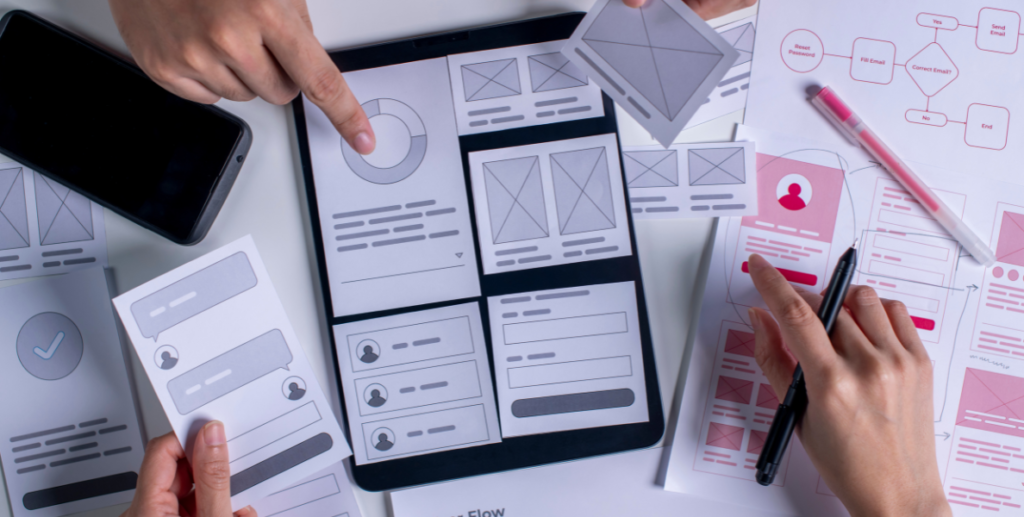
  2. Design and Pre-production: During this phase, UX designers create player journeys, wireframes, and prototypes. They define the game’s controls, feedback systems, and signals, ensuring everything aligns with the player’s expectations.
  3. Production: As development progresses, UX designers test the game with real players, gathering data on usability, narrative flow, and player engagement. They identify any pain points or frustrations, and the development team makes adjustments accordingly.
  4. Playtesting: Playtesting is an essential part of the UX process, where designers observe how players interact with the game and gather feedback on their experience. This feedback informs changes that make the game more enjoyable, intuitive, and accessible.

Tips for Improving UX in Game Design

  1. Know Your Players: Understanding your audience is the cornerstone of good UX. Conduct research to create detailed player personas and ensure that every design decision is made with the player’s needs in mind.
  2. Focus on Gameplay: While immersive visuals and sounds are important, the core of any game is its gameplay. The challenges, missions, and progression must be engaging enough to keep players invested from start to finish.
  3. Maintain Consistency: Consistency in design elements—like colors, button interactions, and iconography—is key to reducing player confusion. Use familiar patterns and avoid changing established interactions throughout the game.
  4. Iterate Through Playtesting: Regular playtests allow you to gather valuable insights into what’s working and what isn’t. Conducting iterative playtests with new players helps ensure that the game remains intuitive for newcomers while still providing a challenge for experienced players.

The Future of UX in Game Development

As games continue to evolve, the role of UX in game development becomes even more crucial. From VR to mobile gaming, new technologies demand even greater attention to the player’s experience. UX designers will continue to shape how players interact with these new platforms, ensuring that games remain accessible, engaging, and fun.

For those interested in pursuing a career in UX within the game industry, now is an exciting time to join the field. Whether your background is in game development or traditional UX, your skills can play a pivotal role in shaping the future of gaming.

In conclusion, UX design is not just an add-on in game development—it’s a critical component that enhances the player’s overall experience. By focusing on usability, accessibility, and player feedback, UX designers ensure that games are not only enjoyable but also memorable.

Creative Lead vs. Project Lead: Understanding the Key Differences in Game Development

When working in game development, particularly in small to mid-sized teams, it’s essential to understand the distinctions between the Creative Lead and the Project Lead roles. While both positions are integral to the success of a project, they focus on different aspects of the process and require unique approaches to leadership. Let’s break down what each role entails and how they contribute to the overall game development pipeline.

The Role of the Creative Lead

The Creative Lead is responsible for the vision and creative integrity of the project. They serve as the filter between the team’s output (artists, designers, programmers) and the final product. Their job is to ensure that everything created aligns with the game’s core concept and that the overall vision remains intact throughout the development process.

In a practical sense, the Creative Lead is the guardian of the game’s soul. They make sure that every asset and design decision fits into the larger creative puzzle. To do this effectively, the Creative Lead must constantly communicate with the team, providing feedback and guidance to ensure that everyone is working towards the same creative goals. It’s a delicate balance—while the Creative Lead offers direction, they must also give team members the freedom to explore their creativity within the project’s framework.

Key Responsibilities of the Creative Lead:

  • Maintaining the core vision of the game.
  • Communicating the creative direction to the team.
  • Ensuring all assets and designs align with the game’s concept.
  • Offering feedback that keeps the project on track without micromanaging.

One of the challenges as a Creative Lead is finding the right level of involvement. You need to be hands-on enough to guide the project but not so much that you stifle the team’s creativity. In my experience, maintaining this balance requires frequent, open-ended discussions with the team. By asking questions like, “How do you see this fitting into the overall game?” or “What are some alternative ways we can approach this design?” you empower your team while keeping them aligned with the game’s vision.

The Role of the Project Lead

The Project Lead, on the other hand, focuses on the logistical and operational side of game development. They are responsible for ensuring that the game is delivered on time, within budget, and that the team works effectively toward this goal. While the Creative Lead is primarily concerned with the “what” of the project, the Project Lead is more concerned with the “how” and “when.”

The Project Lead manages schedules, deadlines, and resources, ensuring the team has what they need to do their jobs effectively. They also act as the primary point of contact between the team and external stakeholders, such as publishers or other studios. In short, they are the team’s logistical backbone.

Key Responsibilities of the Project Lead:

  • Managing the project timeline and budget.
  • Ensuring team members are effective and productive.
  • Handling external relationships (publishers, other studios).
  • Balancing the creative vision with practical constraints.

In my role as a Project Lead, I often found myself advocating for my team, ensuring they had enough time and resources to produce quality work. But I also had to make tough decisions—sometimes asking the Creative Lead to scale back certain features to meet deadlines or budget constraints. This role is as much about leadership as it is about problem-solving, ensuring that the project moves forward without burning out the team or compromising too much on the game’s vision.

Why These Roles Should Be Separate (Most of the Time)

In smaller teams, it can be tempting to combine the Creative Lead and Project Lead roles into one person to free up resources. However, based on my experience, this approach often leads to conflicts of interest. The Creative Lead is naturally driven to prioritize the artistic and visionary aspects of the game, while the Project Lead needs to keep the project on schedule, sometimes requiring compromises in the creative realm.

By keeping these roles separate, you create a system of checks and balances. The Creative Lead can fight to preserve the artistic integrity of the game, while the Project Lead ensures that everything is moving forward efficiently. When both perspectives are represented by different people, it leads to more productive discussions and better decision-making.

The Importance of Communication and Collaboration

At the heart of both roles is the need for strong communication. The Creative Lead and Project Lead must work closely together to ensure that the project moves forward without losing its creative vision. Decisions about priorities, features, and deadlines should involve both roles, with each bringing their unique perspective to the table.

In my experience, a facilitative leadership style works best in these situations. Both the Creative and Project Leads should empower their teams to make decisions while providing guidance when necessary. This approach not only helps the team feel more invested in the project but also encourages problem-solving and innovation.

Conclusion

The roles of Creative Lead and Project Lead are equally important, but they serve different functions within the game development process. While the Creative Lead focuses on the vision and creative integrity of the project, the Project Lead ensures that everything is delivered on time and within budget. Both roles require a deep understanding of the game’s goals and a commitment to collaboration and communication. By keeping these roles distinct, you create a balanced approach that allows for both artistic innovation and practical progress.

Exploring the Game Development Industry: Key Roles and Processes

The game development industry is a vibrant, dynamic, and multifaceted sector where creativity and technology converge to produce experiences that entertain millions around the world. For those looking to break into the industry, understanding its various components is crucial. Whether you dream of designing the next big title or coding the intricacies of multiplayer systems, knowing the roles, processes, and production cycles is the first step to success.

1. Understanding the Roles in Game Development

Game development is a team effort involving various specialized roles. Each person in a game studio brings unique skills to the table, from conceptual design to technical execution. Here are the key roles you’ll encounter in game development:

  • Designers: These creative professionals shape the game’s mechanics and overall experience. They conceptualize how players will interact with the game world, the challenges they’ll face, and the rewards they’ll earn. Design roles can be broken into more specialized categories:
    • Game Designer: Oversees the overall game experience.
    • Level Designer: Focuses on crafting the individual environments within the game.
    • Economy Designer: Manages in-game currencies and the flow of resources.
    • Multiplayer Designer: Creates the systems and interactions for online multiplayer modes.
  • Programmers: The architects of the game’s code, programmers translate designs into playable realities. They handle everything from basic gameplay mechanics to complex networking code for multiplayer games.
    • Gameplay Programmer: Develops the core gameplay interactions between the player and the game world.
    • Network Programmer: Specializes in coding for online and multiplayer systems.
    • Game Engine Programmer: Works on the game’s underlying engine, ensuring performance and adding new features.
  • Artists: Responsible for the visual elements of a game, artists craft the characters, environments, and animations that bring the game world to life.
    • Concept Artist: Creates early visual designs for characters, settings, and overall style.
    • 3D Modeler: Builds the 3D assets, such as characters and environments, used in the game.
    • Animator: Brings 3D models to life with movement.
    • Texture Artist: Adds detail to models by creating realistic or stylized textures.
  • Sound Designers and Composers: They handle the game’s audio elements. From the ambient sounds that enhance the world’s immersion to the music that sets the mood, sound design is a crucial but often overlooked aspect of game development.
  • Quality Assurance Testers (QA): The unsung heroes of game development, QA testers ensure the game is free of bugs and glitches and that it delivers the intended experience.

Each of these roles plays a part in building a game, whether it’s a small indie title or a large-scale AAA production. As you explore the industry, you’ll discover even more niche roles, each critical to delivering a polished final product.

2. The Game Production Cycle: From Concept to Launch

The process of developing a game is structured into distinct phases, each with its own set of challenges and milestones. Let’s take a look at the typical production cycle:

  • Pre-production: This is where the game’s vision takes shape. Designers draft the core mechanics, conceptualize the story, and begin sketching out levels and gameplay elements. Prototypes are often created to test the basic ideas before full development begins. A production roadmap is developed to outline key milestones and deadlines.
  • Production: Once the concept is solidified, full production begins. Artists start creating 3D models and animations, programmers build the game’s systems, and designers continue to refine the gameplay. This is often the longest phase, requiring constant iteration and teamwork to bring the game world to life.
  • Testing: Testing is a continuous process throughout development but ramps up as the game nears completion. QA testers rigorously play through the game, identifying bugs and ensuring that the gameplay is balanced and fun. Every bug that slips through testing can negatively affect the player’s experience, making this a critical phase.
  • Launch: At launch, the game is made available to the public. During this time, developers work on polishing the game and addressing any last-minute issues. Marketing efforts also ramp up to ensure a successful release.
  • Post-launch: Many games continue to evolve even after release. This phase includes issuing patches to fix bugs, responding to player feedback, and sometimes rolling out new content or expansions to keep the player base engaged.

The game production cycle is a complex process requiring collaboration, creativity, and technical skill. Each phase builds on the previous one, and every team member has a role in pushing the project toward completion.

3. Company Confidentiality: Protecting Intellectual Property

In the game industry, protecting ideas, code, and assets is critical. When joining a game development company, you’ll likely encounter terms like intellectual property (IP) and non-disclosure agreements (NDA). Understanding these concepts is vital for anyone working in this field.

  • Intellectual Property (IP): IP laws protect the unique aspects of a game, such as its art, music, story, and even certain gameplay mechanics. Different types of IP protection apply to different elements:
    • Copyright: Protects creative elements like art, music, and narrative.
    • Patents: While you can’t patent a game mechanic itself, unique implementations of mechanics can be protected.
    • Trademarks: Protects names, logos, and branding.
    • Industrial Design: Covers the visual design of products, though its application in games is more complex.
  • Non-disclosure Agreements (NDA): Many companies require employees to sign an NDA, ensuring that sensitive information about an unreleased game remains confidential. Leaking information can have serious legal and professional consequences.

Company confidentiality helps protect both the game and its creators, ensuring that all the hard work poured into the project isn’t compromised.

Conclusion: Finding Your Path in Game Development

The game development industry is vast, offering a wide range of opportunities for people with various skills and interests. Whether you’re drawn to design, programming, art, or sound, there’s a place for you in the world of game creation. By understanding the roles, production processes, and confidentiality standards, you can better navigate the industry and find the right path for your career.

So, dive into the credits of your favorite games, explore job roles, and start honing the skills you need to join this exciting field. The world of game development is waiting for you!

Mastering Game Design: The Core Elements That Drive Success

Game design is often viewed as a blend of creativity and technical expertise, but at its heart, it’s about delivering an engaging and unforgettable experience. The process of designing games involves deep thinking about mechanics, experiences, goals, and player guidance. This post will explore some core ideas of game design and how they form the foundation of creating impactful and enjoyable games.

1. Start Simple: Identifying the Core Mechanic

When designing a game, the most crucial step is identifying the core mechanic. This mechanic acts as the game’s foundation—it’s the action that players will repeat throughout the game. For example, in Super Mario Bros, the core mechanic is jumping. Mario’s ability to jump allows players to defeat enemies, hit blocks, and avoid obstacles. This simplicity keeps the gameplay intuitive yet engaging.

Core mechanics don’t need to be complex to offer depth. In fact, having a focused core mechanic allows designers to iterate and expand on it, introducing new challenges or elements while keeping the player grounded in the game’s fundamental action. This focus prevents overwhelm in both design and gameplay, allowing the game to grow naturally around a simple idea.

2. Crafting the Experience: What Should Players Feel?

Beyond mechanics, the heart of game design lies in crafting an experience. What emotions or sensations do you want players to have? Are you aiming for thrill, fear, or a sense of exploration? The experiences you aim to provide should influence every design decision, from the mechanics to the level design. For instance, Skyrim encourages exploration and adventure through its vast open world, while games like Civilization challenge players with strategic thinking.

Every system you add to the game should enhance the experience. Whether you’re creating a horror game that instills fear or a co-op game that fosters teamwork, knowing the player experience you want to create helps focus the game’s design and development.

3. Setting Goals: Engaging Players with Short- and Long-Term Objectives

Games thrive on goals. Without objectives, there’s no sense of progression, and players may quickly lose interest. Goals can be short-term, such as completing a quest, or long-term, like defeating a final boss. The balance of these goals keeps players engaged, as short-term wins create momentum toward the ultimate end.

A perfect example is Angry Birds, where the short-term goal is to finish a level and earn stars, while the long-term goal is unlocking more levels with enough stars. Short-term accomplishments fuel the desire to keep playing, while the long-term goals provide a meaningful endgame.

4. Systemic Gameplay: Letting Systems Interact

Linear games guide players down a specific path, while emergent games allow systems to interact in unpredictable ways. Systemic gameplay is a hallmark of many modern games like Breath of the Wild and Minecraft, where players can solve problems or approach challenges using different mechanics that interact dynamically.

For example, in Breath of the Wild, fire interacts with various systems—lighting grass on fire, burning enemies, or even being extinguished by rain. This emergent gameplay creates a sense of freedom and experimentation that makes the experience deeply personal for each player.

5. The Core Game Loop: Keeping Players Engaged

A core game loop is what keeps players coming back. It’s the series of actions that players will repeat throughout the game. A strong game loop involves a cycle of action, reward, and progression. In an RPG like Stardew Valley, for example, players plant crops, harvest them, sell the produce for profit, and invest in better seeds. This cycle of progress is simple but addictive, as it provides constant feedback and rewards.

The best games often have multiple loops interacting with each other, such as combat, crafting, and exploration. This layered approach allows players to switch between activities, keeping gameplay fresh and engaging over time.

6. Guiding the Player: Subtlety in Design

Guiding players through levels or the world is a vital part of game design. However, this doesn’t always mean overt directions like arrows pointing the way. Subtle guidance through lighting, colors, and environmental design can make the experience more immersive.

For instance, in Mirror’s Edge, the color red is used to indicate interactable objects, subtly guiding players without breaking immersion. Meanwhile, in Skyrim, towering landmarks like mountains or cities draw players’ attention to key locations without the need for a blatant objective marker.

7. Game Feel: The Tactile Joy of Play

Finally, “game feel” is an essential yet often overlooked aspect of design. Game feel refers to how responsive and satisfying the game is to play, from movement to combat. Great game feel is achieved through responsive controls, audiovisual feedback, and polish.

Take Super Smash Bros., where every hit feels impactful due to the sound effects, screen shake, and visual effects like particle splashes. These details create a tactile experience that players feel through their actions, making each movement and attack satisfying and rewarding.

Conclusion

Game design is a multifaceted process that balances mechanics, experience, goals, and feedback. By focusing on the core mechanic, crafting a desired experience, setting meaningful goals, encouraging systemic interactions, and perfecting game feel, designers can create games that not only entertain but also leave a lasting impression on players. Whether you’re crafting an indie hit or the next AAA title, these principles will help you create games that resonate with your audience.